Personal Finance Guide: Wealth Building Strategies in a Shifting Interest Rate Environment
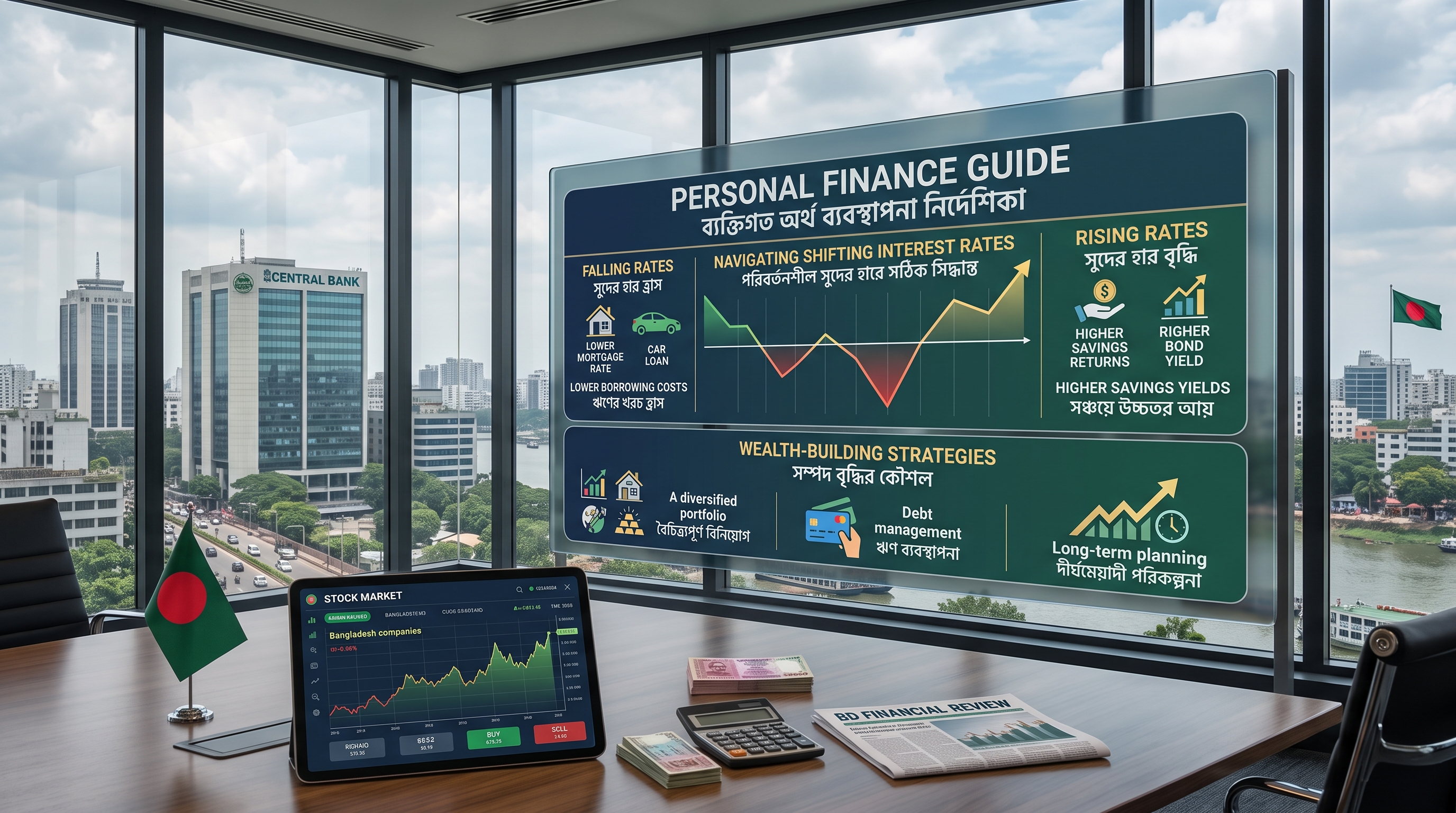
A money management guide for Bangladeshi families, addressing emergency cash buffers, FDR laddering, inflation hedging, and e-TIN tax savings.
Managing personal finances effectively in Bangladesh requires a structured and adaptive framework as inflation metrics recalibrate and interest rate policies evolve. With headline consumer price inflation hovering near 8.32 percent, earning positive net real returns—defined as nominal interest yield minus inflation and taxes is the primary objective for disciplined savers. Leaving idle funds in standard savings accounts fails to preserve purchasing power over time, making active asset allocation essential for household CFOs.
A robust personal financial strategy begins with establishing an emergency liquidity reserve equal to 3 to 6 months of essential living expenses before committing funds to multi-year investments. This liquidity should be held in high-yield liquid accounts or 3-month fixed deposit receipts (FDRs) to allow immediate access during unforeseen events. Once emergency buffers are secured, investors can optimize fixed-income returns using an FDR laddering approach: splitting capital across staggered 6-month, 1-year, and 3-year maturities. This structure provides regular liquidity events while locking in higher long-term yields across reputable commercial banks.
Beyond traditional fixed deposits, long-term wealth protection benefits from asset diversification into physical gold (which acts as a structural inflation hedge) and tax-efficient savings certificates. Furthermore, maintaining an active e-TIN with tax authorities reduces the Tax Deducted at Source (TDS) on deposit interest from 15 percent down to 10 percent, significantly improving compounding returns over time. Regularly reviewing household asset allocations ensures long-term capital preservation across changing economic cycles.
References
Free calculators
All calculatorsEMI & loan calculator
Monthly installment, total interest and a full repayment schedule. Compare two loan offers side by side.
Zakat calculator
Work out your nisab status and the 2.5% zakat due on cash, gold, silver, savings and business assets.
FDR & DPS maturity calculator
Maturity amount for a fixed deposit or monthly deposit scheme, after compounding and source tax.
Read next

Bangladesh Bank's First Rulebook for Islamic Credit Cards Bans Hidden Profit and Growing Late Fees
Bangladesh Bank has issued its first comprehensive guidelines for Islamic credit cards, replacing interest based charges with a fixed service fee and turning late payment penalties into a pre agreed charity donation that cannot escalate. Here is how an Islamic card now differs from a conventional one, and what the new fraud protection and cooling off rules mean if you carry one.

Bangladesh's Inflation Ticks Up to 8.34% in September, Snapping a Three-Month Cooling Streak
After three straight months of easing, Bangladesh's point to point inflation rose to 8.34 percent in September, up from a ten month low of 8.26 percent in August, Bangladesh Bureau of Statistics data show. Food prices did almost all the damage, rising to 7.22 percent even as non food inflation held steady. The uptick lands the same week a World Bank report found nearly half of Bangladesh's poorest households get no safety net support at all, a reminder that an eight basis point move in the national average can still mean real hardship for families with the least room to absorb it.

Fuel Price Hike Sends Kitchen Market Prices Higher Across Dhaka
Kitchen markets across Dhaka are recording a fresh round of price increases after the government raised fuel prices by Tk20 per litre on September 21, with traders citing sharply higher transport costs as the main driver. Green chilli prices effectively doubled, most vegetables rose 30 to 40 percent, and staples including flour, rice, eggs and milk all climbed within days of the fuel adjustment. The increase follows an earlier wave of price pressure a week before, suggesting the market has been absorbing repeated cost shocks rather than a single one off jump. Economists including CPD's Fahmida Khatun warn that Bangladesh's official inflation figures understate how squeezed ordinary households actually feel, since food and transport costs weigh far more heavily on lower income budgets.