Gold Price Falls Again in Bangladesh, 22 Carat Now 234,038 Taka a Bhori

Bajus cut the price of 22 carat hallmarked gold by 1,108 taka to 234,038 taka per bhori on Tuesday, the second reduction in three trading days after a volatile stretch that saw prices swing by thousands of taka within a week. The metal has now been repriced 111 times so far this year as local rates track a choppy international bullion market. Silver moved in step with gold through the same period.
Gold buyers in Bangladesh woke up to a slightly cheaper market on Tuesday, with the Bangladesh Jewellers Association cutting the price of 22 carat hallmarked gold by 1,108 taka to 234,038 taka per bhori, effective from mid morning. It is the second reduction in three trading days and caps off a genuinely volatile stretch for the metal, one that has seen prices swing by thousands of taka in a single week as local jewellers try to keep pace with a choppy international bullion market.
Alongside the flagship 22 carat rate, the association also trimmed prices across its other grades. Twenty one carat gold now sells for 223,541 taka per bhori, down 1,049 taka, eighteen carat gold fell 933 taka to 191,931 taka, and traditional method gold, the grade most associated with older, hand worked jewellery, dropped 700 taka to settle at 156,822 taka per bhori. All figures include the mandatory value added tax, though the making charges jewellers add for finished pieces sit on top of these base rates.
A week of whiplash
To understand Tuesday's cut, it helps to look back just a few days. On September 6, Bajus had already trimmed the 22 carat rate by 2,216 taka per bhori to 235,146 taka, citing a fall in the price of tejabi, or refined, gold in the local market. That followed an entirely different move only days earlier, when the association raised the 22 carat rate by a sizeable 5,482 taka per bhori on September 3, a jump that itself came after three consecutive price cuts. Add Tuesday's reduction to Saturday's, and the cumulative pullback over the two most recent adjustments comes to 3,324 taka per bhori, unwinding a meaningful chunk of the early September spike.
Bajus has now made 111 separate price adjustments in the calendar year so far, a mix of 56 increases, 54 decreases and a single VAT related revision, an unusually high cadence that reflects how directly local prices are tied to swings in the international gold market. Under the association's pricing mechanism, its standing committee on pricing and price monitoring reviews rates against the prevailing cost of tejabi gold and international benchmarks, adjusting the domestic rate whenever the gap becomes wide enough to justify a change rather than sticking to a fixed schedule.
Why gold has been this jumpy
The swings in Dhaka mirror a broader pattern playing out in international bullion markets, where gold has spent much of the year reacting to shifting expectations around interest rates in major economies, continued central bank buying in several countries, and periodic bouts of safe haven demand tied to geopolitical tension. When international prices move sharply in either direction, Bangladesh's domestic rate typically follows within a day or two, since virtually all of the gold sold through the formal jewellery trade here is priced off imported bullion rather than any significant domestic mining base.
For ordinary buyers, that responsiveness cuts both ways. It means the domestic price accurately reflects what gold is actually worth on any given day rather than lagging the global market by weeks, but it also means anyone timing a purchase around a wedding season or another fixed date has genuinely little room to predict what the exact price will be even a few days out. Jewellers in Dhaka's gold markets say enquiries tend to spike noticeably whenever a cut is announced, as buyers who had been waiting move to lock in the lower rate before the next adjustment, whichever direction it turns out to be.
Silver moves too, though more modestly
Silver has tracked a similarly bumpy path alongside gold, though the taka amounts involved are naturally smaller given silver's lower base price. When Bajus pushed through the September 3 gold increase, it raised 22 carat silver by 116 taka per bhori in the same notice, moving both metals together as it typically does, a reminder that the same international pricing pressures driving gold's swings apply just as directly to silver.
What buyers should keep in mind
With Tuesday's price standing at 234,038 taka per bhori for 22 carat gold, the rate now sits roughly 3,300 taka below where it stood after the September 3 jump, though still meaningfully above the levels seen during the run of cuts that preceded that increase. Anyone planning a significant gold purchase in the near term would do well to check the latest Bajus notice on the day of purchase rather than relying on a price even a few days old, given how frequently the association has been revising its rates this year. The underlying message from 111 adjustments in a single year is straightforward, gold in Bangladesh is now repricing almost as fluidly as the international market it tracks, and buyers who want to catch a favourable rate need to watch the market nearly as closely as jewellers themselves do.
Weddings, festivals and the timing problem
The frequency of these swings creates a genuine planning headache for a market where gold buying is heavily tied to specific calendar events rather than spread evenly through the year. Wedding season purchases, in particular, tend to be locked in well ahead of the actual ceremony, with families often deciding on jewellery budgets months in advance even though the final price paid depends entirely on wherever Bajus happens to have set the rate on the day of purchase. Jewellers in Dhaka's traditional gold markets say this mismatch between planning horizon and pricing volatility has pushed some buyers toward instalment style purchase schemes offered by larger retailers, which let a customer lock in grams of gold at intervals rather than committing to a single lump sum purchase on a single, potentially unfavourable day.
The domestic price swings also sit inside a broader regional picture in which gold has become an increasingly prominent store of value across South Asia, with buyers in Bangladesh, India and Pakistan all watching the same underlying international benchmark even as local duties, VAT regimes and jewellers association pricing mechanisms produce somewhat different retail rates in each market. For Bangladeshi buyers, the domestic price is arguably more transparent than in markets where informal premiums vary widely from shop to shop, since Bajus publishes a single association wide rate that every hallmarked retailer is expected to follow, even if that rate itself has proven anything but static this year.
Read next
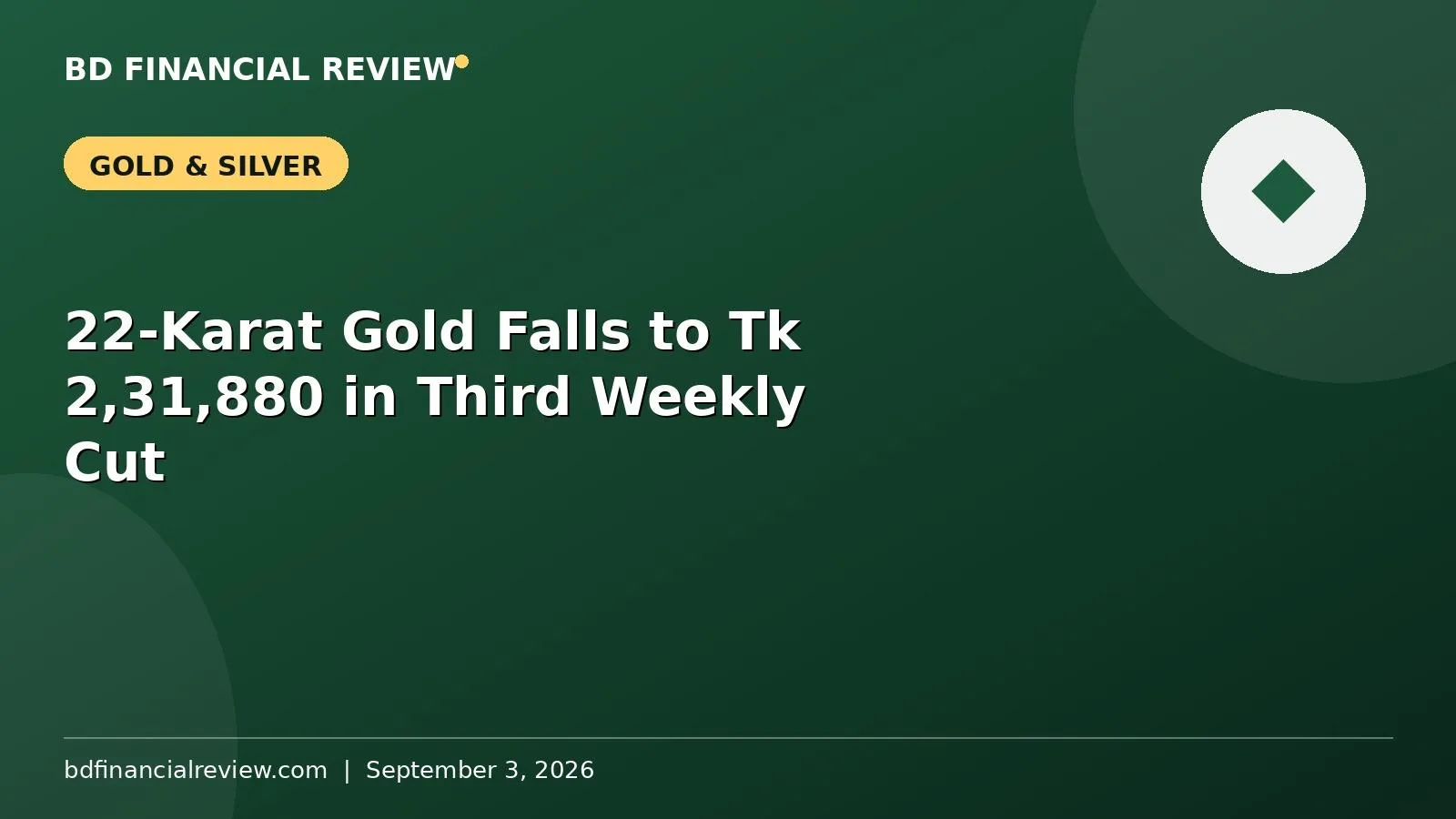
Third Cut in a Week: 22-Karat Gold Falls Again to Tk 2,31,880 as Bajus Tracks the Global Slide
Bangladesh's jewellers cut gold prices for the third time in five days on September 2, pulling 22-karat gold down to Tk 2,31,880 per bhori. The Bangladesh Jewellers Association points to falling prices in the international bullion market, and the new rate has held steady into September 3. Silver prices eased too, though far more modestly.
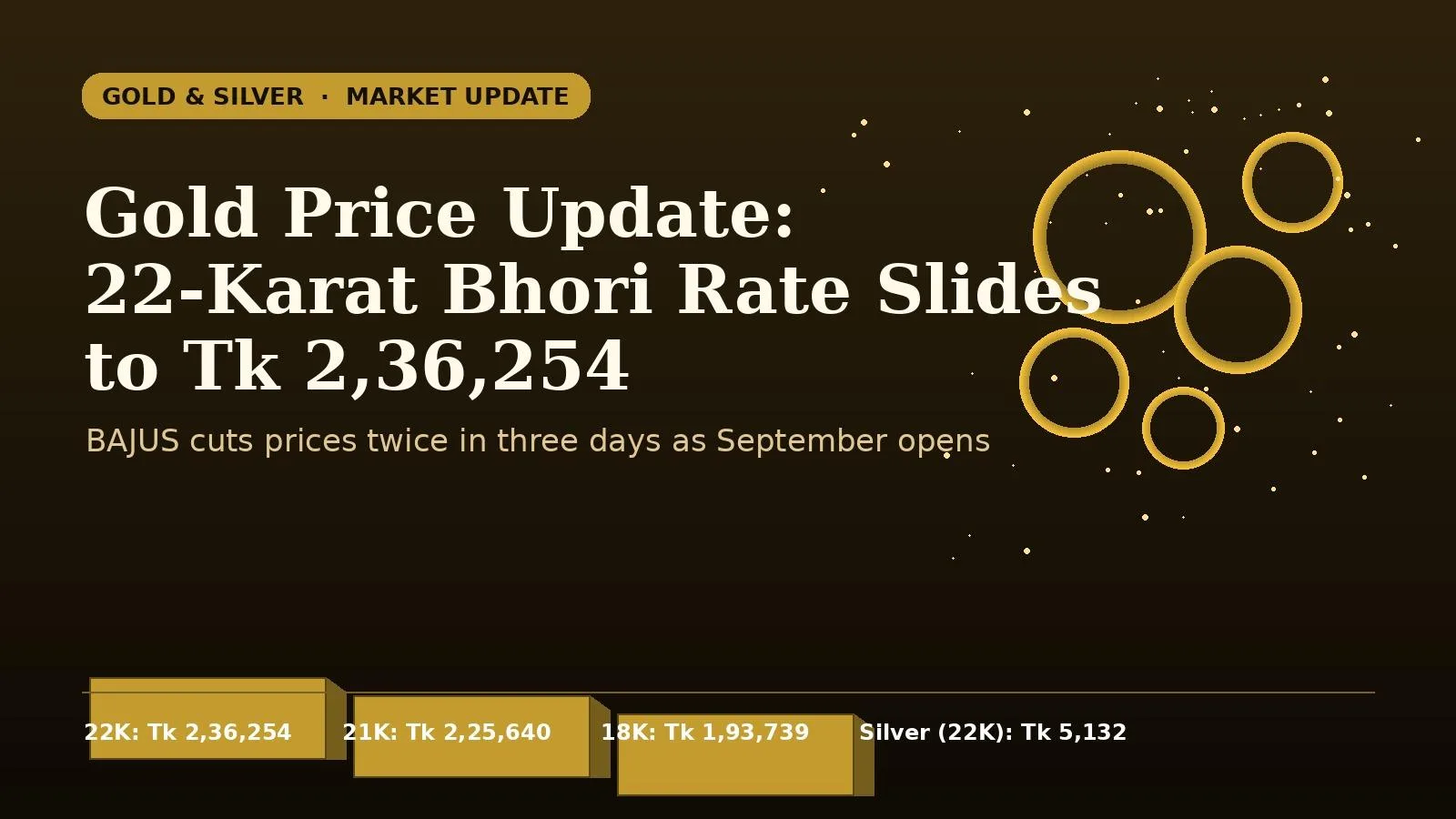
Gold Price Update: 22-Karat Rate Falls to Tk 2,36,254 as BAJUS Cuts Twice in Three Days
Bangladesh's gold market has cooled since August's wild price swings. BAJUS slashed 22-karat gold prices twice in three days, on August 29 and August 31, pulling the bhori rate down by a combined Tk 11,489. As of September 2, the new lower price is holding steady and silver has eased too. Here is what changed since our last report, and what it means if you are buying jewellery this month.
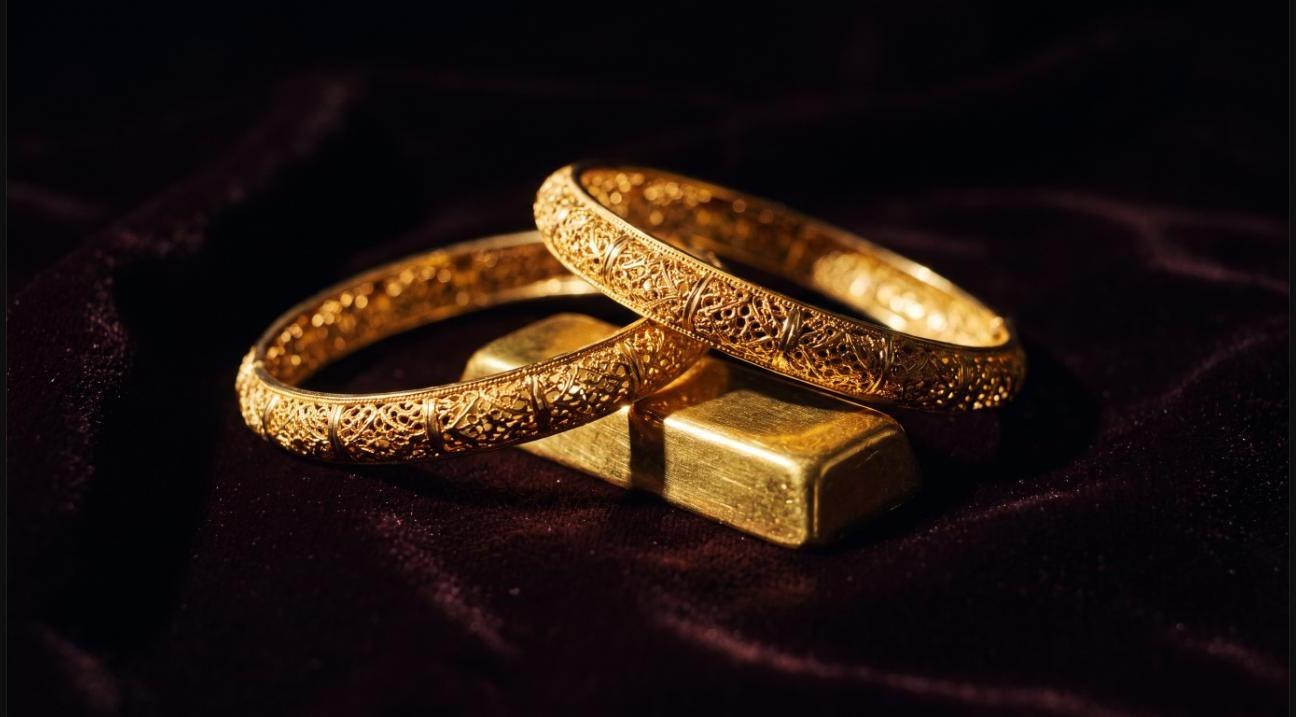
Gold Price Rollercoaster: Why the Bhori Rate Swung From ৳2.23 Lakh to ৳2.48 Lakh This August
In under four weeks, the price of 22-karat gold in Bangladesh climbed from ৳2.23 lakh to a peak of nearly ৳2.48 lakh per bhori, then pulled back to ৳2.41 lakh. If you are planning a wedding purchase, topping up jewellery savings, or simply trying to understand why the rate on the shop counter keeps changing, here is what is actually driving it and what it means for your next purchase.